
 41 minutes ago
2
Mary could tell that her husband was “distraught” the moment he was wrongly accused of shoplifting and ordered to leave Home Bargains. The ordeal left him feeling “isolated”. “I was scared to go into a shop,” he said. They had only popped out to pick up some vitamins.
Elsewhere, a woman’s husband was left “shaking from head to toe” after she was told to leave Budgens on account of stealing “loads of meat” the week before. “My mind was racing,” she said. They hadn’t been to that shop for months.
Facial recognition is an inherently personal and intimate technology. It scans your features, processes your biometric data and, depending on its results, can stop you from entering a particular space.
It might all take place in an instant but its impact extends far and can be surprisingly long lasting — something that is made all the worse by a dizzying lack of clarity about who is to blame when something goes wrong.
‘Taste the indifference’
Earlier this week, in a cramped room in the House of Commons, people wrongly accused of shoplifting by facial recognition technology met to discuss their experiences with Labour MP for Stoke-on-Trent South, Dr Allison Gardner.
The event, sponsored by the civil liberties group Big Brother Watch, was designed to give people an opportunity to air their grievances with politicians, the media, and the companies involved.
Above all, perhaps, it gave everyone the chance to get some answers about how the system works, who is to blame when it doesn’t work as intended, and to start planning how best to move forward.
Big Brother Watch invited Facewatch, the company behind the technology, to attend. It also invited representatives from Sainsbury’s, a company that is currently in the process of introducing facial recognition to 200 of its stores.
Neither company sent representatives to the event.
On hearing details of one specific case, Dr. Gardner said she “had so many questions.” Was it an algorithm glitch, a shop worker making an honest mistake, or something else? Unfortunately, there was no one to answer the specifics.
“You can taste the indifference,” someone at the back of the room said.
“Sainsbury’s is happy to scan its customers’ faces but won’t face the people its technology has harmed,” Jasleen Chaggar, Senior Legal and Policy Officer at Big Brother Watch, later told TechRadar.
Each of the testimonies from people wrongly flagged by the technology shared striking similarities. A routine activity was suddenly transformed into a confusing, public ordeal of having to defend themselves against allegations they did not immediately understand. People said they felt “bewildered”, “isolated” and “confused.”
However, while the emotional impact was consistent, the specifics of each case were often not.
Some people were stopped the moment they walked through the shop doors. Others were confronted at the tills with a full basket. The errors were equally unpredictable. One person was a victim of mistaken identity, while another saw their face flagged on an overhead screen. One woman was wrongly intercepted simply because the system had identified the people walking in directly behind her.
There was talk of algorithms, of bias and poorly configured training data, of mechanisms for redress, and off-the-record chats about how some managed to gather more information.
The overarching feeling was one of bureaucratic exhaustion. Shoppers were left with no clear path to clear their names. “I didn’t know who to turn to,” one person said.

NEW: Leave No Trace — A weekly newsletter on digital privacy and online surveillance.
Leave No Trace investigates the companies and governments putting our digital freedom at risk — and the people fighting back.
📩 Subscribe now to get every edition delivered to your inbox every Friday.
The corporate defence
TechRadar reached out to all the companies mentioned in this article. Booker Group, which owns the Budgens brand, refused to comment on record. Sainsbury’s did not respond, and neither did Home Bargains.
Facewatch said it gave the invitation “serious consideration” but cited concerns about the balance of the event “given the tone of Big Brother Watch’s campaign messaging to date”. The company said that it had provided an explanation to the organizers and parliamentary co-chair, offering to answer questions after the session.
When asked who is liable when the system produces an error, Facewatch said it "takes responsibility for its technology and processes, and retailers are responsible for how their staff interact with customers” though it said legal liability “depends on the facts and it cannot responsibly be determined by providing a blanket answer”.
The company also said that when a false alert occurs, it initiates a “safeguarding process with the retailer to establish exactly what happened”.
Facewatch added: “We challenge campaign messaging that uses those incidents to create a disproportionate impression of the risk to ordinary shoppers. Facewatch operates discreetly and successfully in thousands of stores across the UK every day. Presenting exceptional incidents as representative of that everyday operation is misleading and risks creating unnecessary fear.”
‘Salt in the wound’
The lack of clarity that follows when someone is mistakenly flagged by the facial recognition system is the “salt in the wound of being publicly humiliated,” Big Brother Watch’s Chaggar said.
When TechRadar visited a South London Sainsbury’s earlier this month, we found that there was no viable way of opting out of the facial recognition system and that security had little information about how the system works. There are signs with QR codes at the entry of the shops, though attendees said these contained insufficient information following a dispute.
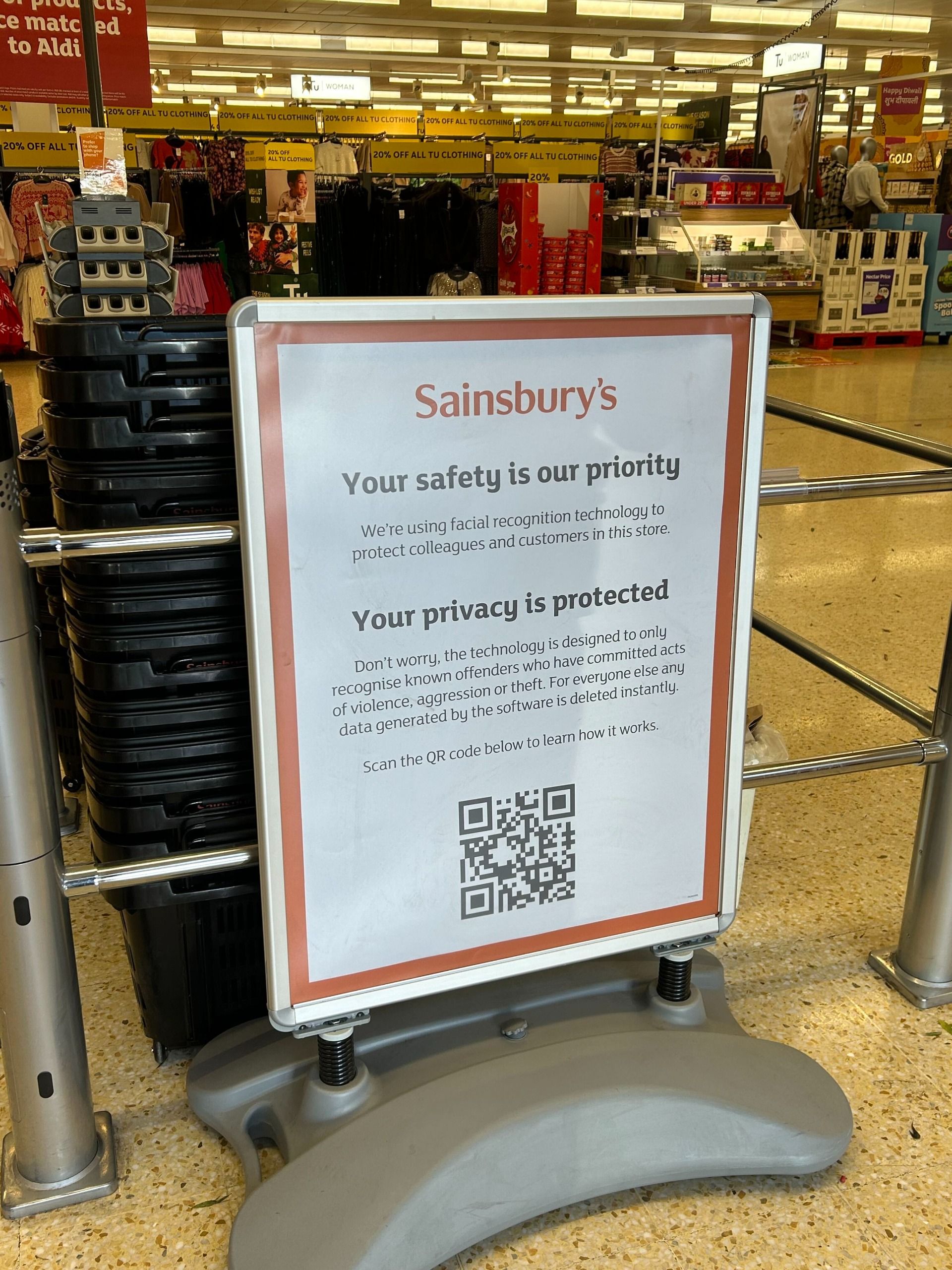
Big Brother Watch offers some respite for the affected people, helping individuals navigate Subject Access Requests (SARs) — a statutory mechanism under UK data protection law used to force companies to disclose what data they hold. But the process is slow, demands that victims surrender even more personal data, and offers no guarantee that a face will actually be removed from watchlists.
“It’s the stuff of Kafkaesque nightmares to be trapped in a maze of bureaucracy and forced to hand over even more personal data just to be told the accusation,” Chaggar told TechRadar.
The UK’s data privacy regulator, the Information Commissioner's Office (ICO), acknowledged the severity of the testimonies, calling the experiences "harrowing". It said it hoped to share more concrete insights into the commercial use of the technology soon.
But for now, the confusion remains and the blame for when it goes wrong is still unclear.
Following the event, Dr. Gardner told TechRadar that she is "extremely concerned at the poor implementation and lack of governance" surrounding the technology and will be raising the issue with ministers and contacting companies directly.
She added that she would “like to know what redress is being given to wrongly accused individuals that is proportionate to the upset caused. Who is accountable and can be held liable.”
Until those questions are answered, the lack of clarity isn't just acting as a regulatory loophole; it risks creating a chilling effect for the wider public. If one person was “frightened to go to a shop” for weeks after, then perhaps you would be too.
Names have been changed to protect affected peoples’ privacy.