
 12 minutes ago
2
Nvidia is in turmoil after the resignation of Jensen Huang, with the CEO's departure coming after an accusation of him having an affair with a suspected Chinese spy (alongside an allegation of a second affair). Chief Financial Officer Colette Kress has been announced as the interim CEO to hold the Nvidia fort while the board conducts the search for a permanent replacement.
Team Green's stock has plunged during these revelations, and to say the loss of Huang is going to be felt keenly is an understatement. He was a key figure and intrinsically linked to Nvidia's success, a CEO cut from the same cloth as the likes of Steve Jobs.
He also exerted a level of control at Nvidia which was quite astonishing. Most CEOs have, what, 10 execs directly reporting to them (probably fewer). A few years back, Huang told the New York Times (via Business Insider) that he had around 50 direct reports in order to minimize the 'layers' in the company (meaning middle management).
Huang was also pivotal to Nvidia's entire business strategy, as analyst Ming-Chi Kuo made clear in a post on X, in terms of "deciding on aggressive spec upgrades and making them happen" based on his clout with the supply chain. Kuo observed (just prior to Huang's exit, I should clarify) that: "His value is that he weighs strategy, organization, technology, and supply chain all at once, then makes the call quickly and puts resources behind it."
Huang was clearly critical in terms of the internal workings of Nvidia as well as its broader strategy and direction. But with the CEO's departure, it's not just shareholders who should be worried – this could be the worst news for PC gamers who are already concerned about the state of play with GeForce GPUs.
Why gamers need to worry about Nvidia losing Huang
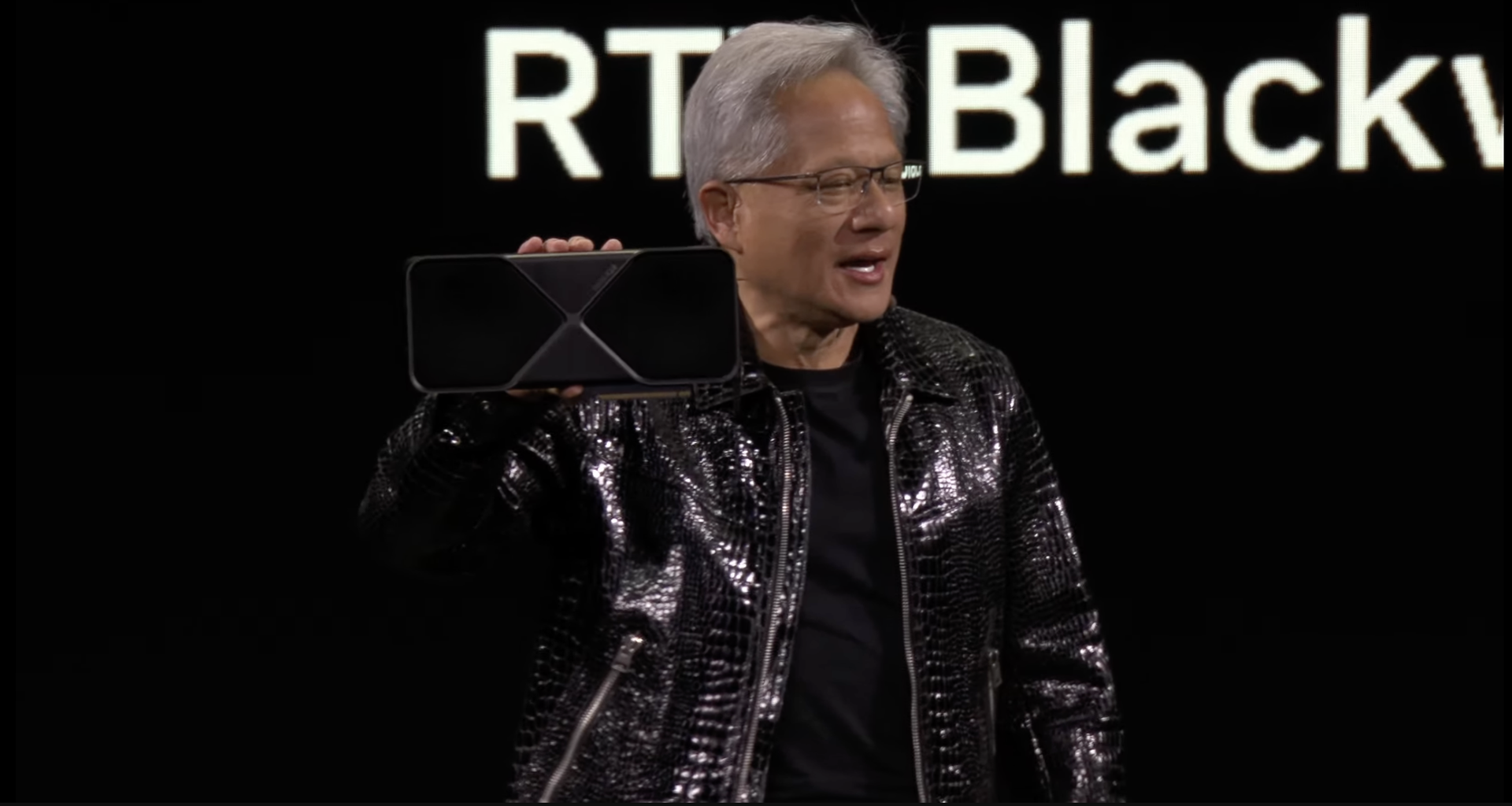
Nvidia is now in a panic, let's make no bones about that. There was no clear succession path for the CEO position by all accounts, and this has all happened very suddenly.
The interim CEO, Colette Kress, is the CFO and as such a name readily associated with Nvidia's financial wherewithal. Presumably the idea is to introduce a sense of financial stability here – a steady hand on the rudder in that respect for the time being while the board searches for Huang's full-time replacement.
Whoever that turns out to be will doubtless feel that stepping into Huang's shoes – or maybe that should be donning his leather jacket – is an intimidating prospect.
So what's the worry for PC gamers specifically? Here's how the theory runs. Even with a new CEO – whoever that replacement may be – Nvidia obviously isn't going to suddenly run dry of profits. A Reuters report quotes Shay Boloor, chief market strategist at Futurum Equities, who speculated on Huang's departure before it happened, noting that: "I don't see the next 12 to 18 months of revenue suddenly disappearing if Jensen were to leave."
However, Boloor added: "My bigger concern is next decade, because Jensen isn't simply Nvidia's CEO but he's the person who has consistently identified where computing is going before customers even realise. Replacing that strategic vision ... is an enormous challenge."
Here's where matters get tricky for gamers, as guess what? The CEO who eventually replaces Huang – and indeed Kress in the interim – is going to want to ensure big profits continue to be funnelled Nvidia's way, and so the obvious tactic is to try and maximize that AI revenue stream. In what's reportedly an internal message from Kress to Nvidia staff posted on X by Miranda Nazzaro of The Hill, the interim CEO said: "We play a vital role in building the technology that is powering the AI revolution, and we have important work ahead of us."
Gaming GPUs might become an even more sidelined consideration than they already are, due to concerns about impressing the board and shareholders, meaning Nvidia's new permanent CEO is probably going to go even more all-in on AI.
And let's not forget that part of the reason for GeForce being kept more central in Nvidia's overall messaging to date was due to Huang's personal leanings and fondness for the GPUs which he helped create at the turn of the last century. His successor won't be bound up in such sensitivities, and this GPU history will inevitably mean little to them.
A tough situation gets tougher

Bringing this all into focus, Nvidia's GPUs (and AMD's) have already been hit by huge price increases of late. The high-end graphics cards have got truly out of hand with their pricing, and this situation won't get better. In fact, it was already predicted to get worse, and I've been saying for some time now that 2027 is going to be a dire year for GeForce GPUs (and Radeon for that matter – AMD has also fully declared itself as a 'data center first' company).
Now, heap on top of that already dismal outlook the loss of Huang – and an eventual replacement who is very likely to more consistently overlook consumer GPUs, to wholly focus on getting Nvidia's stock and revenue up by further capitalizing on AI – and you've got a prospective recipe for a frighteningly barren time for desktop GPUs in the future.
Nvidia is huge, a multi-trillion behemoth of a company. The world's second largest by market valuation (behind Apple). The AI sun is shining, and the hay to be made is endless (or it seems that way for now). Nvidia cannot afford to loosen its grip on the huge revenue streams it has built up, and with Huang gone, make no mistake – all hands will be on deck to ensure that the data center chips keep flowing. As for gaming GPU chips, well, the GeForce brand could now be more firmly on the path to becoming a thing of the past.
Maybe that's overly dramatic, granted, but I can't help feeling that it's inevitable that the stock levels and therefore pricing of Nvidia's consumer GPUs won't be helped by Huang's exit. And frankly, the last thing we need is for yet another negative drag factor to hit PC graphics cards as we head into the murky future of GPUs.