
 1 hour ago
2
1 hour ago
2
Midea 5L Induction Rice Cooker review: two-minute review
Midea makes a wide range of home products, ranging from fans, coffee machines, dehumidifiers and even a two-in-one washing machine and robot vacuum cleaner. It also offers a wide range of kitchen appliances, including the 5L Induction Rice Cooker reviewed here, which the brand looks to position as an affordable alternative to specialist rice cookers from Japanese brand Zojirushi, Taiwanese brand Tiger and South Korea’s Cuckoo, whose top-tier offerings can cost as much as AU$1,248 / SG$1,419. This model is only available in Australia, New Zealand, Singapore and a handful of other Southeast Asian countries for a fraction of that price.
While a rice cooker won’t replace a multicooker outright in most households, models like this one from Midea are multifunctional, allowing you to steam, make soup (or at least prep for some kinds of soups) and even bake cakes.
That said, the specialty of Midea's Induction Rice Cooker is in its name: cooking rice. For this, it offers presets for three firmness levels, adjusting for mixed rice grains and for making what the brand calls ‘claypot rice’ (rice with other ingredients like proteins and vegetables to make a complete meal).
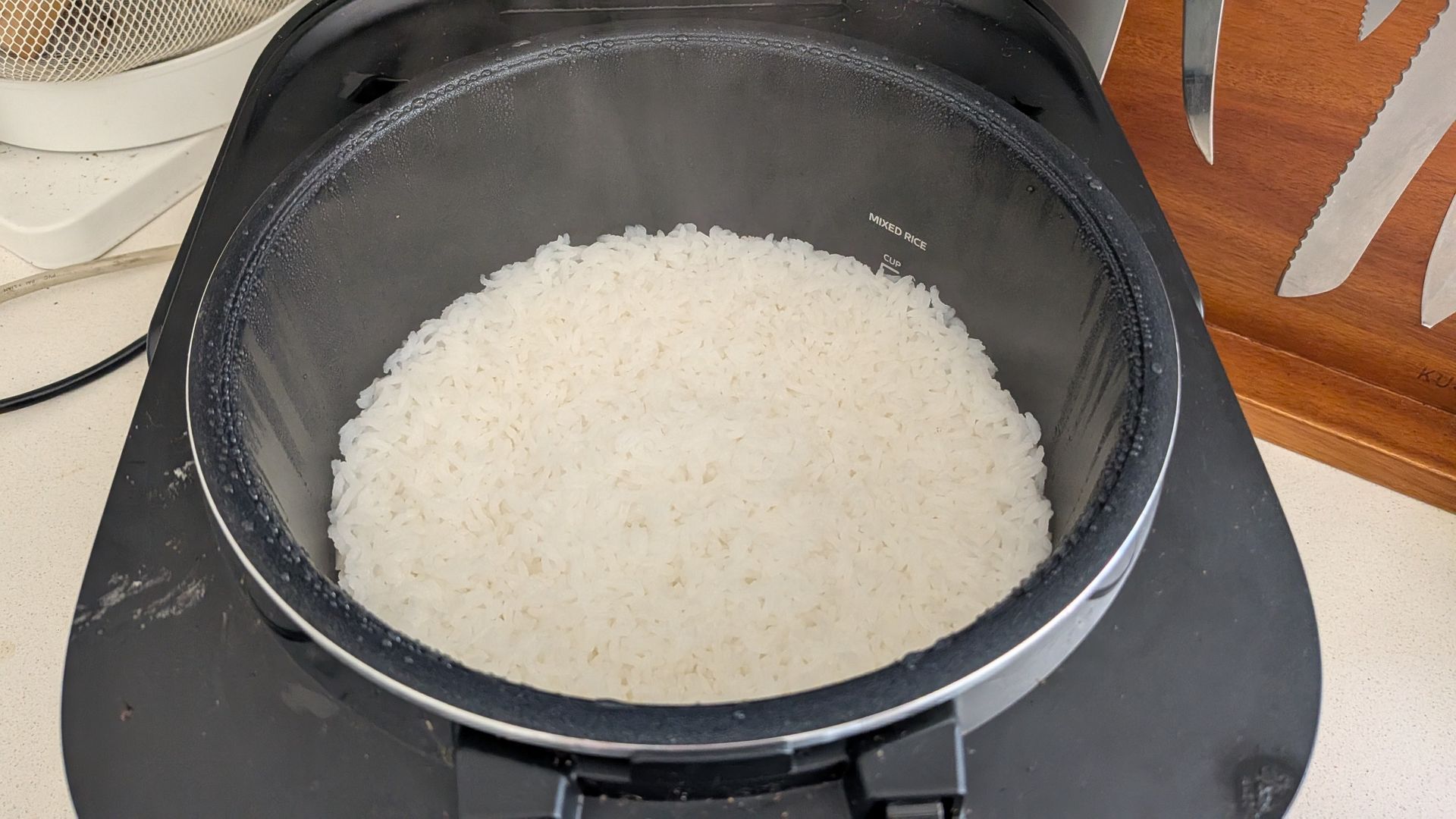
It looks sleek and premium and is arguably much better-looking than most multicookers, although it’s large enough to take up the same amount of counter space. The 5L capacity can accommodate up to 10 cups of rice, and the included steaming basket allows you to cook an entire meal for 2 people easily enough. For instance, I cooked a salmon fillet and some frozen vegetables in the basket while I had rice cooking underneath, and everything came out perfect, although I should note that the cook time is relatively longer when it's multitasking like this.
I also used the steam function to ‘boil’ eggs and I consistently got the results I wanted, whether that was a soft boil, jammy or a proper hard boil without overcooking. I could also do some light sautéing to create a simple meat sauce for gnocchi, creating enough heat for the onions, garlic and minced beef to cook through, and then switched to ‘Quick Cook’ for the rest of the way with the pasta.
During testing, the Midea cooked soft, regular and firm rice well with noticeable differences, while the soup and congee settings produced delicious results. I had mixed results with the cake function — my attempt at banana bread got a slightly burnt crust (but the interior was moist), while pancakes were cooked perfectly (although Midea’s suggested timings in its online recipe were a bit off). Admittedly, that result has more to do with my lack of baking experience than with the rice cooker itself, but it still wouldn’t be my first choice for baking a cake or making bread.
The Keep Warm button is useful for keeping leftovers fresh, though it tends to dry out food when it’s kept in the pot for too long.
I wouldn't call Midea's 5L Induction Rice Cooker perfect for all its advertised features, but it’s a nice upgrade from the basic heating plate-based rice cookers with just a single function or, alternatively, an inexpensive way to get a specialty option. On the other hand, you’re better off with a proper multicooker if you don’t cook rice a lot, especially if you need pressure cooking.
Midea 5L Induction Rice Cooker review: price and availability
- List price: AU$199 / NZ$199 / SG$199
- Available from select retailers in limited Asia-Pacific markets
The Midea 5L Induction Rice Cooker is available from Amazon in Australia and various retailers in Singapore. It often gets discounted to AU$149 / NZ$169 / SG$149, so it’s worth keeping an eye out for discounts, especially during major sale events like Black Friday.
That's a heck of a lot cheaper than spending upwards of AU$700 / NZ$1,000 /SG$600 on specialty rice cookers from Japan, Taiwan and Korea, although you do get what you pay for — the more expensive models give you better control over the cooking process. However, the Midea alternative is still a worthwhile consideration for anyone on a budget as long as you don't need a multicooker.
- Value: 4/5
Midea 5L Induction Rice Cooker review: specifications
Price: |
AU$199 / NZ$199 / SG$199 |
Weight: |
6kg |
Size: |
29.2 x 24.8 x 36.8 cm (h x w x d) |
Capacity: |
5L |
Functions: |
Rice, soup, congee, reheat, steam, cake, keep warm, delay start |
Accessories: |
Standing rice paddle, soup ladle, measuring cup, steam basket |
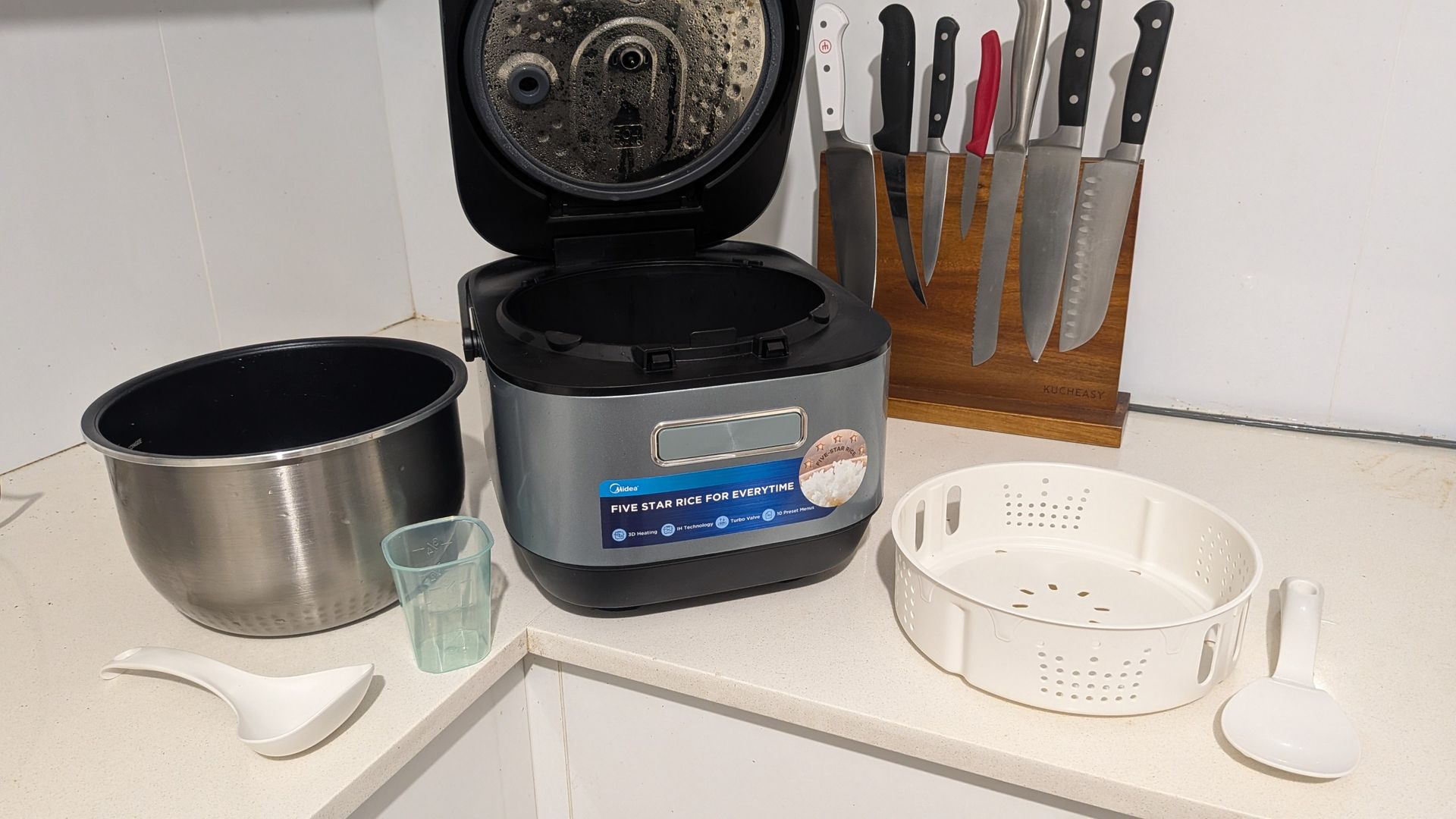
Midea 5L Induction Rice Cooker review: design and features
- Induction cooking for evenness
- Lid-mounted controls
- Dishwasher-safe inner pot and accessories
The Midea Induction Rice Cooker is a well-designed kitchen appliance that looks sleeker than most multicookers, with touch buttons are on the lid that manage to both blend into the design while also standing out for good visibility. All the buttons are lit to which cooking mode is active as you toggle through the options. For rice, you can choose from soft, regular and hard, as well as dedicated settings for quick cooking, Jasmine rice, mixed grain rice, and ‘claypot rice’, or rice with other ingredients (like vegetables and proteins) to make a complete dish.
The lack of a pressure-cooking function means the lid is completely flat with a small valve at the top that Midea claims is “anti-spill”. The lid opens up with the touch of a button in front of the unit, with the non-stick inner pot sitting inside. The pot has multiple markings for guidance on water level for different rice options and steaming.
Midea says the non-stick coating is infused with Binchotan, or Japanese white charcoal powder, which is commonly found in specialised rice cookers and kitchenware, aimed at radiating far-infrared heat to improve thermal efficiency and neutralising unpleasant odours or tastes. The included steam basket sits on top of the inner pot, though it’s relatively small at just 5.5mm deep and just enough to cook for maybe 3-4 servings of vegetables or 2-3 servings of meat (about 2 servings only if combining meat and veg).
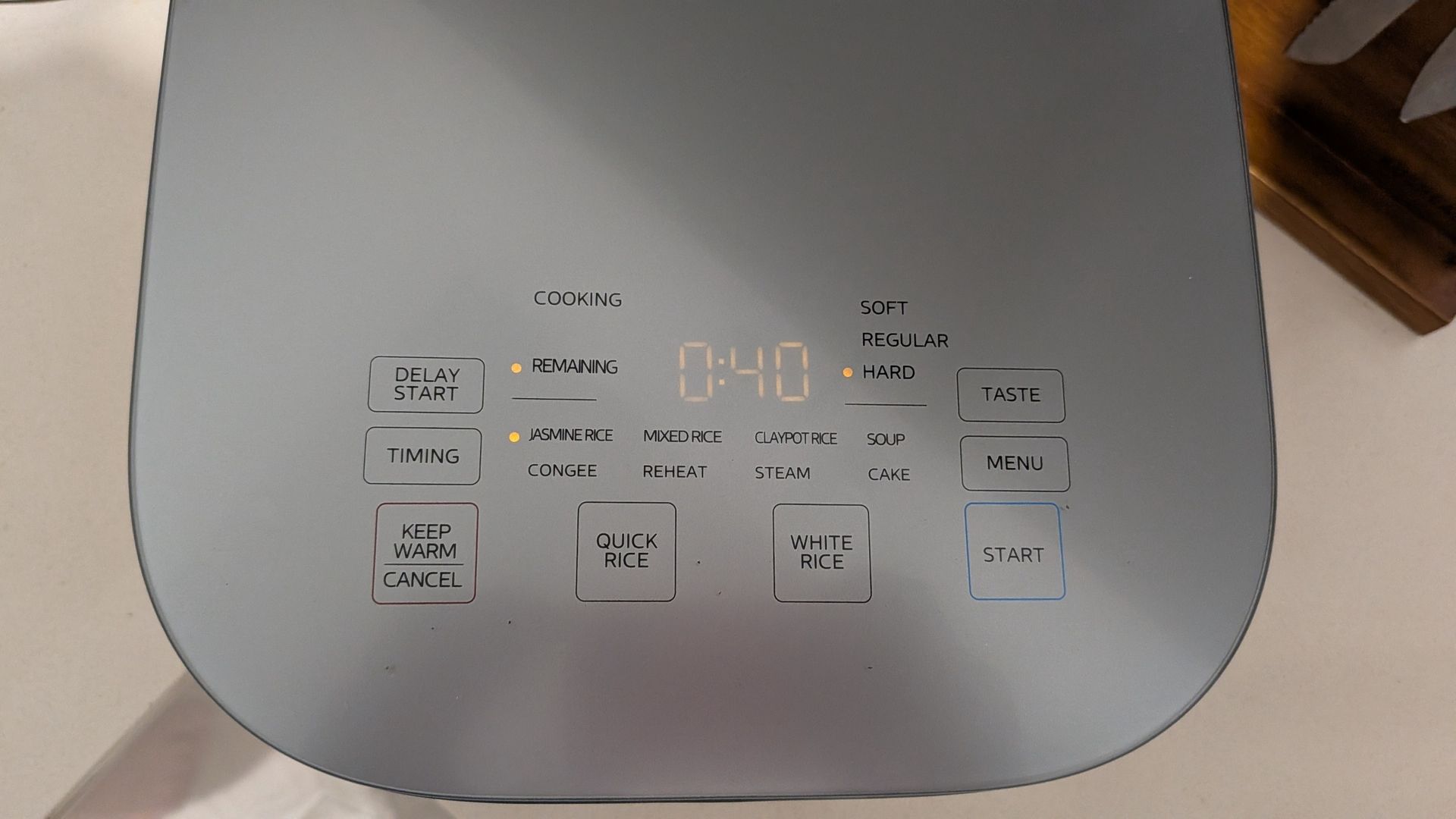
Unlike a multicooker, you can’t adjust cook times (except for soup, congee and steaming), but the rice cooker uses temperature sensors to ensure balanced and even cooking. The Keep Warm feature can run for up to 24 hours — though I wouldn’t recommend leaving food in there for too long — and there’s also a reheat button that runs for 20 to 30 minutes. The Delay Start button can schedule your cooking for later, like preparing everything before you leave the house, then timing it to finish as you come back.
Other accessories include a rice paddle with a handle designed to stand up vertically, a small soup ladle, and a measuring cup for 180ml or 180g. All the accessories are dishwasher-safe.
- Design and features score: 4/5
Midea 5L Induction Rice Cooker review: performance
- Rice programs are long, especially brown rice
- Rice firmness settings are accurate
- Steam and cake functions are surprisingly versatile
Rice is my main staple for most dishes, having grown up in an Asian household, so I would regularly cook 1-2 cups of jasmine rice in the Midea at least a few times a week. I used all three settings — soft, regular and hard — with each result depending on the dish I’m pairing the carb with. In two months of testing, every setting has been accurate with the results.
I would occasionally mix in some quinoa and pearl barley with the jasmine rice to make it healthier and to add a different texture, and the Midea’s ‘Mixed Rice’ setting worked like a charm — every grain was cooked through with the texture and consistency I wanted. I used the same setting for brown rice and had the same results. Admittedly, my old multicooker produced softer and fluffier brown rice thanks to pressure cooking, which is missing here, but the results were still delicious.
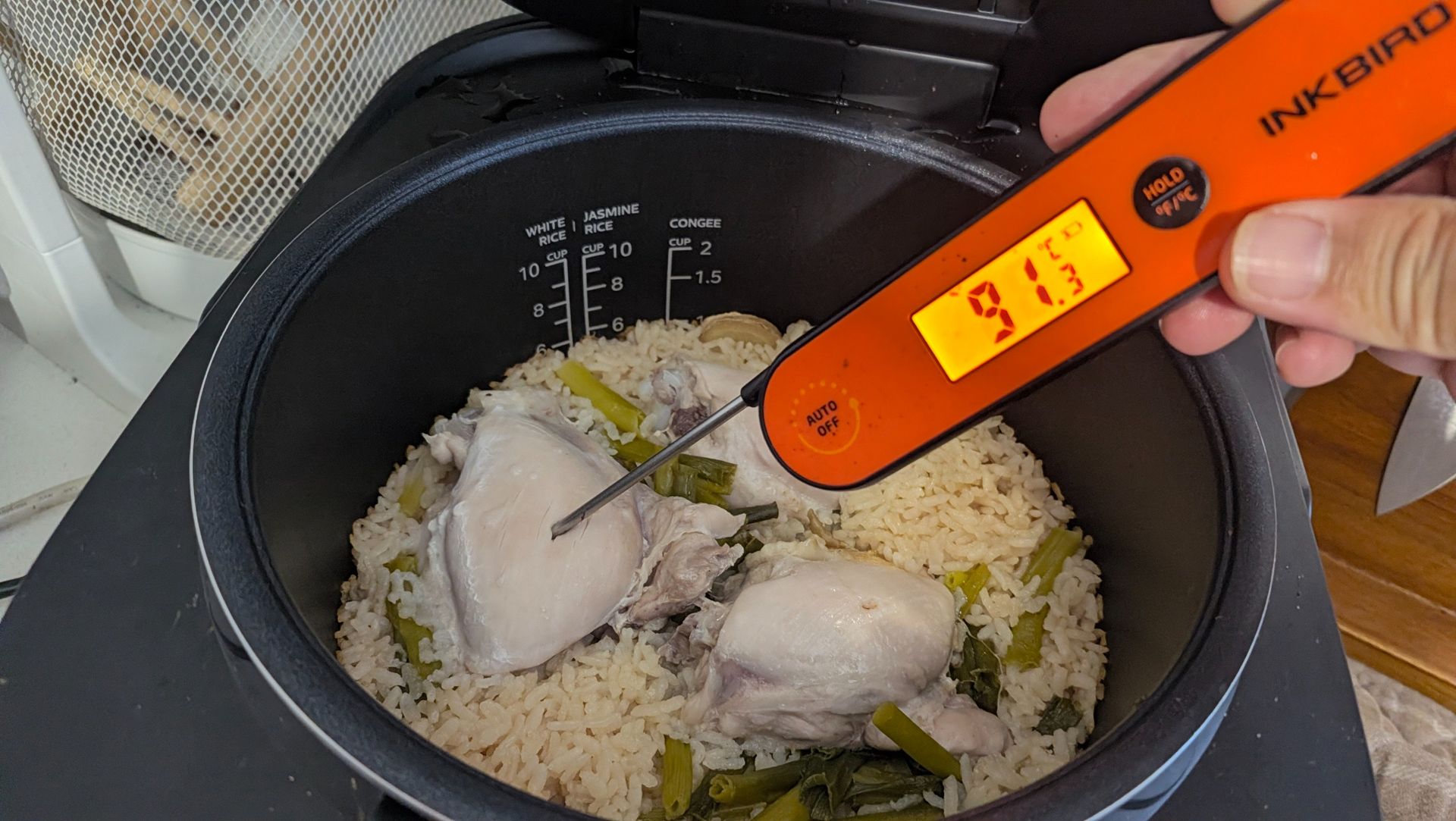
To test the ‘Claypot Rice’ function, I made a quick and simplified version of Hainanese chicken rice, where I swapped the water for chicken stock, sprinkled some spring onions and ginger slices, then placed two chicken thighs on top. It was set to one hour by default, so there was plenty of time to ensure the chicken was cooked through, though I was concerned it could be too long and might dry the meat out.
The chicken was cooked through, although the internal temperature went over 90ºC, a bit higher than I’d like. It wasn’t completely dry, thankfully, and was still tasty along with the rice. The rice itself was well-cooked, and it even had a crispy, charred crust around the edges, just like the traditional dish made in actual clay pots.
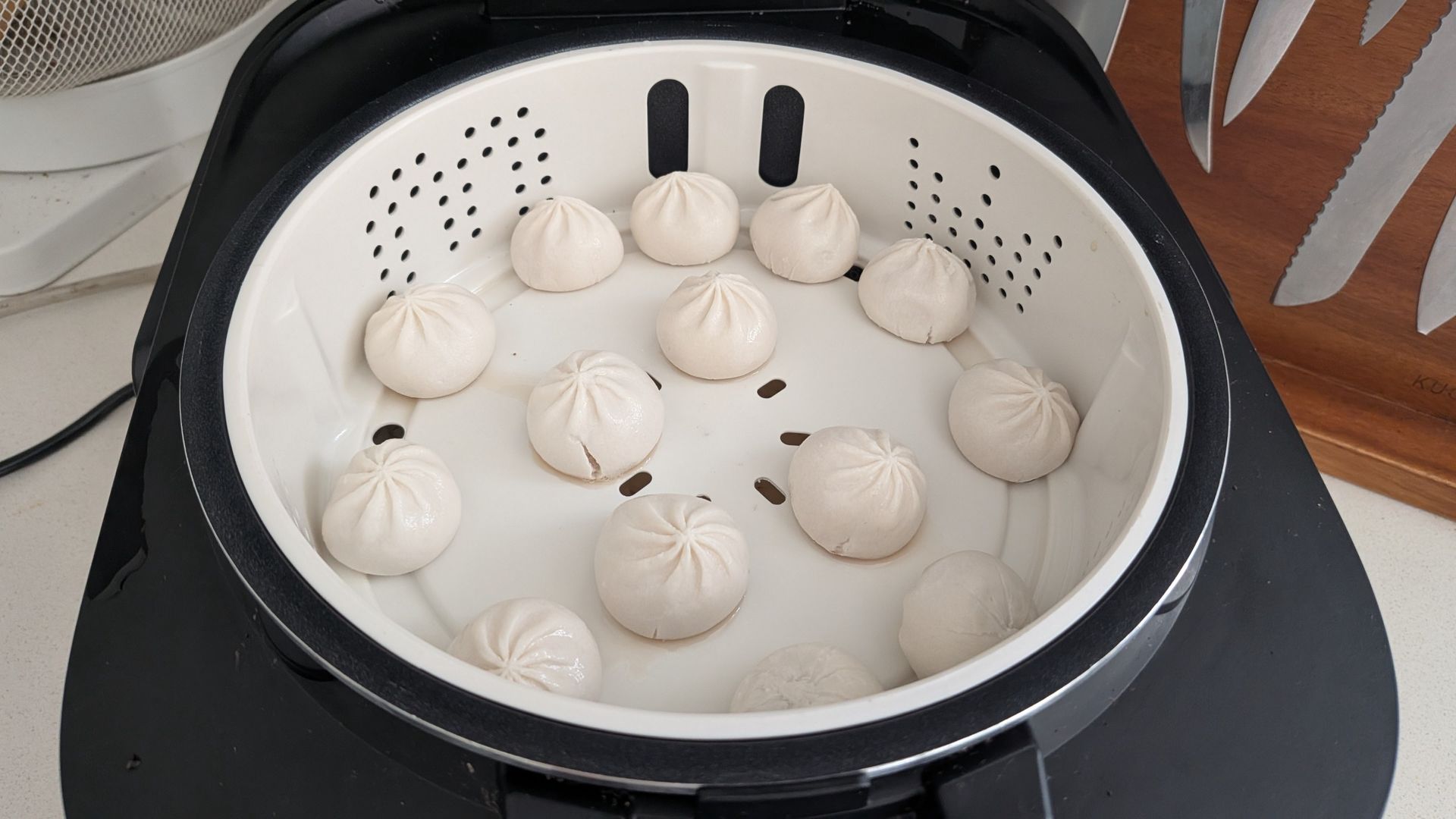
The included steaming basket is deep enough to fit whole pieces of chicken breast, chicken thighs or a salmon fillet, or up to 3-4 servings of vegetables. There’s a measuring line in the inner pot to indicate the minimum level of water you need for the steam function.
Steaming defaults to 15 minutes, but can be adjusted with the Timing button. Pushing the functionality further, I also cooked eggs in the rice cooker by following the usual cooking times (5-6 min for runny yolks, 7-8 for jammy yolks and 11 minutes for hard-boiled eggs) and, with a bowl of ice water nearby to stop cooking, I achieved precise results each time.
The steaming basket’s shallow height meant there was plenty of room to cook some rice at the same time instead of just using water for steam generation only. This way, I cooked an entire meal using my usual jasmine rice setting — this included two cups of the rice in the inner pot, with a salmon fillet and a single serving of frozen broccoli in the basket on top. On the 50-minute setting for regular rice firmness, the salmon was perfectly cooked and not dried out as I feared, while the broccoli was cooked through but not overly soft. The rice was also well-cooked.
Making soup is straightforward, as you can dump all the ingredients in the inner pot and set your desired cook time. As this function is essentially a simmer, you can open the rice cooker to check in occasionally without affecting the soup’s quality.
I made a chicken stock-based chickpea soup where I boiled canned chickpeas in chicken stock for 30 minutes using the Soup function — just enough to soften the chickpeas for blending before I mixed it back in. The result was a rich, creamy soup just like how I would cook it on a stove.
While it’s great for some soups, I’ll be sticking to a regular stock pot when ingredients need to be blended — it's quicker on prep time and cleaning up to stick a hand blender into the stock pot directly, and you won't need to worry about damaging the non-stick coating of the rice cooker.
I tested the Congee mode by making porridge, swapping out the rice for steel-cut oats and using a mix of water and chicken stock, plus seasoning. I followed the suggested liquid level for congee marked in the inner pot’s guide and set it for the default 1-hour cook time. It was enough time to achieve the consistency I wanted, which is relatively thick, with the steel-cut oats cooked all the way through.
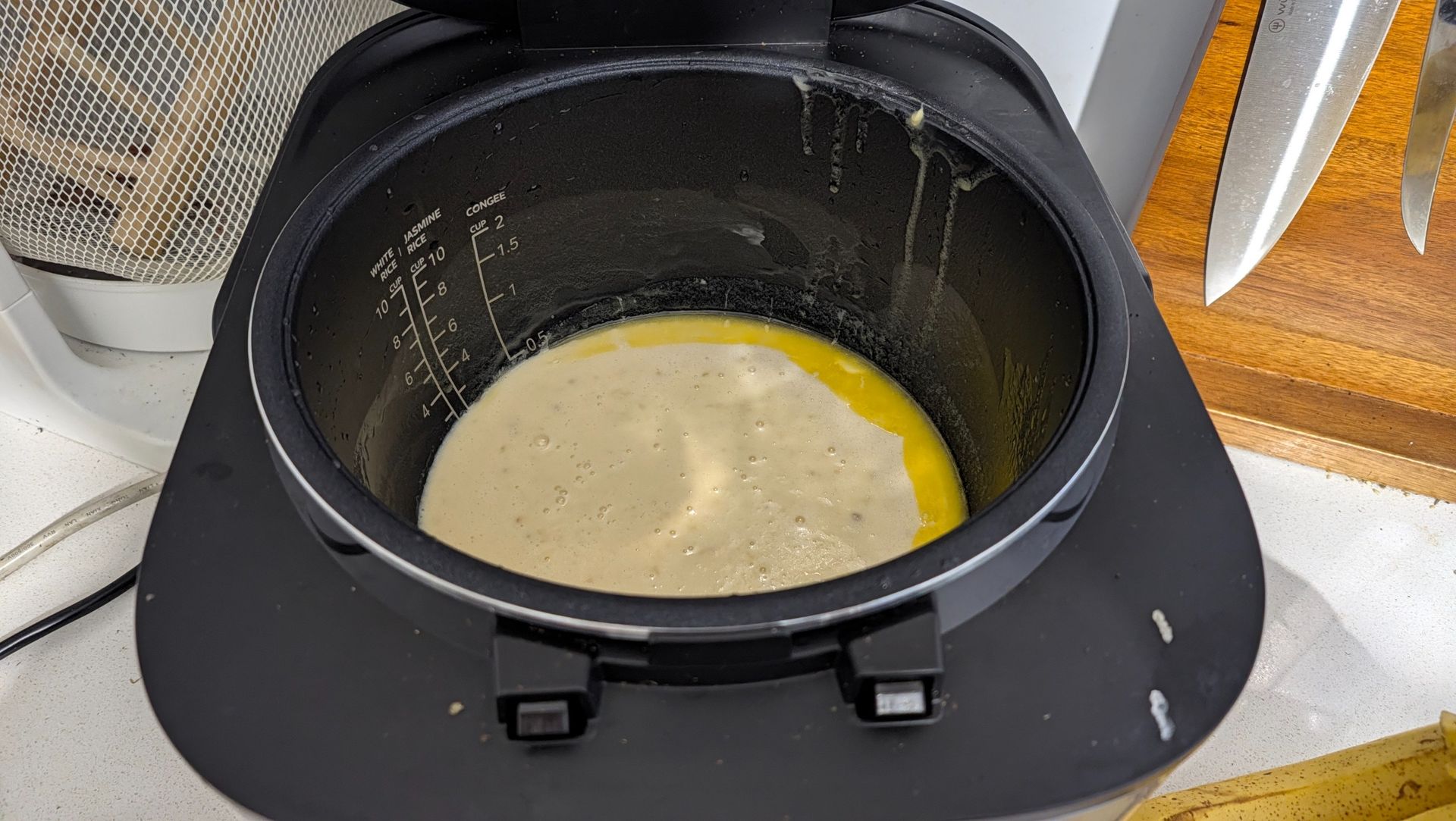
To test the ‘Cake’ function, I tried a shortcut banana bread recipe using a packaged pancake mix to make a denser version. My initial attempt was unsuccessful as I kept opening and closing the lid (a big no-no, it turns out), and I may have put in more milk than I should have. My second try was better, where I redid the same 50-minute cook time setting and sprinkled in some oats in the centre to help it absorb some liquid and add some texture.
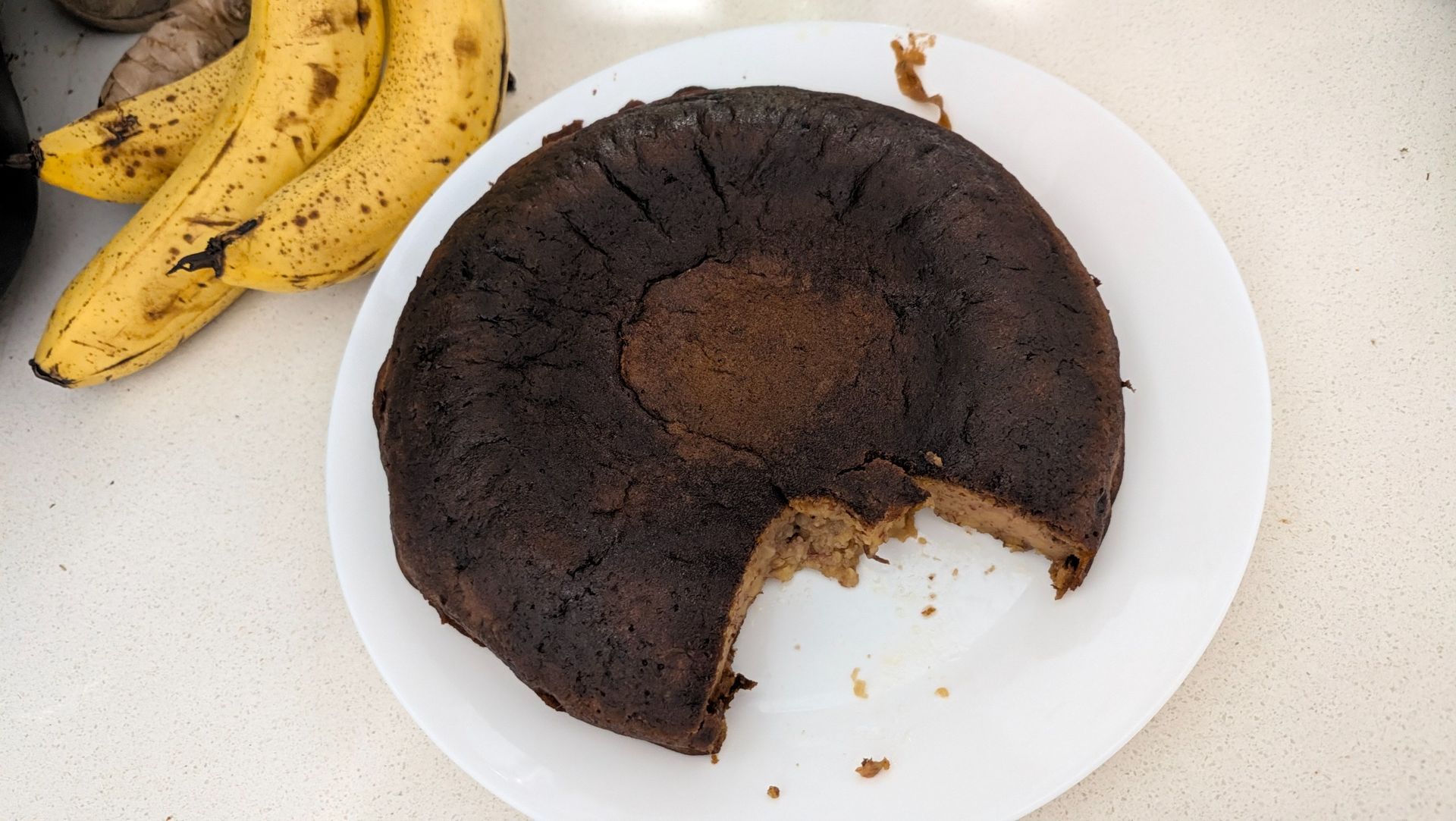
The banana bread turned out well, albeit with a crust that was a little too dark brown (i.e. slightly burnt) but a moist centre. Well, a baker I am not and I'm still uncertain about the Midea rice cooker's bake functionality.
On the other hand, I had better success with pancakes when using the Cake setting. I scooped in a thin layer of batter at a time into the inner pot and cooked each side for 2-3 minutes each, according to a social media post from Midea ANZ. It turns out that was not nearly enough, and I kept the cooking going for a few more minutes before flipping to the other side.
The pancakes were cooked through after about 6 minutes for each side, though getting them out of the pot was tricky due to the depth of the pot. The results were OK, but the effort of taking the pancakes out of the pot makes me want to stick to using a pan on the stovetop instead.
Midea’s marketing materials also showed that light sautéing is possible even if there isn’t a specific ‘Sauté’ function, so I tried making a quick meat sauce to pair with gnocchi. I tried the ‘Steam’ function (as the time can be adjusted) to start off with the minced beef, and then put the gnocchi in after the meat was cooked and set it for ‘Quick Cook’. Again, the meal was OK, though the meat didn’t have the kind of caramelisation I wanted.
- Performance score: 4/5
Should you buy the Midea 5L Induction Rice Cooker?
Attributes |
Notes |
Rating |
Value |
A reasonably priced induction rice cooker that’s cheaper than specialty rice cookers, though pressure cooking would have been welcome at this price point. |
4/5 |
Design |
Simple and intuitive controls all in a sleek and modern design, but no up and down arrows for adjusting cook times. |
4/5 |
Performance |
Some cook times are slow, but it produces great results, though having no pressure cooking means some tougher grains won’t be as soft and fluffy. |
4/5 |
Buy it if...
You want a more affordable specialty rice cooker
This has a lot of the features found in boutique rice cookers from Japan and Korea, but at a more affordable price.
You want to cook more than just rice
This is a great choice if you cook rice a lot, but also want something that can do more to earn its place in the kitchen.
You don’t have access to a cooktop
If you live in accommodation without any cooktops, like a dorm room, it may be a better option than a multicooker if you cook rice often.
Don’t buy it if...
You need pressure cooking
There’s only induction heating here, so you may have to look elsewhere for something with pressure or get a multicooker if rice isn’t a priority.
You need to cook for a crowd
5L is plenty for a small household, but you’ll struggle to make enough rice for a party of more than 6 people.
You don’t have the counter space
This rice cooker isn’t very compact despite its relatively small 5L capacity, although it’s still smaller than most multicookers.
How I tested the Midea 5L Induction Rice Cooker
- I cooked in it over a period of two months
- I used six different cooking functions
- I noted how easy it was to clean
Having previously maintained the Australian version of the best Instant Pots, I tested this rice cooker as if it were a multi-cooker, albeit without a pressure-cooking function. I primarily cooked various types of rice, but also made eggs, steamed fish and broccoli, chickpea soup, and porridge. Instead of testing the pressure-cooking, I used the 'Cake' setting to make banana bread and pancakes.
During these tests, I was evaluating how straightforward the cooker is to use, and how easy it was to adjust the settings. I also cleaned it by hand to see how easy it is to clean. I also noted any other quirks or frustrations along the way.
Read more about how we test.
[First reviewed October 2026]