
 2 months ago
32
2 months ago
32
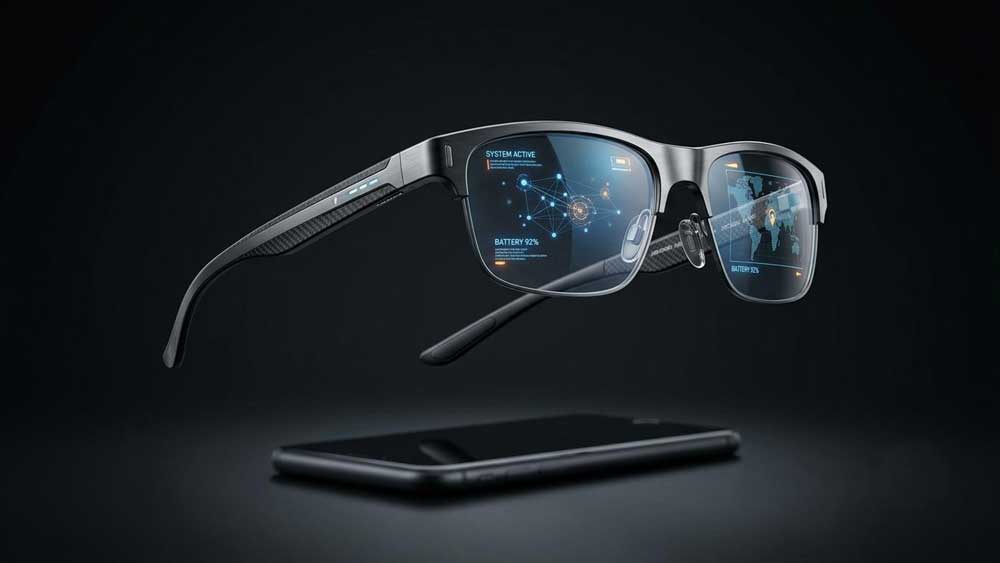
A question that until recently sounded like science fiction now has a $150 million check behind it.
And this is no ordinary deal.
Who's behind it In July 2026, Even Realities — a three-year-old Shenzhen startup founded by ex-Apple engineers (including CEO Will Wang, who worked on Apple Watch and iPhone) — closed a $150M Pre-Series B round led by Meituan (China's largest food delivery and local services platform), with Tencent and other Chinese funds also participating.
Valuation: $1 billion. Unicorn status in just 3 years.
Why would a food delivery company lead an AI glasses round? Because Meituan's entire business is about connecting digital services to the physical world: delivery riders, restaurant recommendations, local services. If AI glasses become the primary interface for accessing local services — not a phone — Meituan wants to be positioned at the hardware layer before that shift happens.
Even Realities' philosophy: less is more While Meta and Snap chase cameras and content capture, Even Realities chose the opposite path:
- No camera — privacy by design
- Built-in HUD display — information projected directly into your field of view
- Companion ring R1 — navigation via tap and swipe
- Just 37 grams — comfortable enough to wear all day
Price? $599 for the frames, up to ~$1,000 with prescription lenses and the ring. Yet the company is already profitable.
This is not an isolated case: the "Hundred Glasses War" In the first half of 2026, the sector saw a flood of capital:
- INMO (Chengdu): Series C1 completed in January 2026, valuation of 2 billion yuan (~$280M), with investors including Chengdu Science and Technology Investment and Tencent MyApp. The company achieved break-even in 2025 with ~$28M revenue and is planning a Hong Kong IPO.
- XREAL (Beijing): closed a $100M round in January 2026 at a unicorn valuation, partnered with Google for Android XR, and ranked among the top 5 global smart glasses vendors with 2% market share in Q1 2026.
IDC estimates that global smart glasses shipments will reach 13.6 million units in 2026, with the category surging 167% YoY in Q1 2026 alone. Display-less smart glasses shipped roughly the same volume in Q1 2026 as the entire category did across all of 2024.
The inflection point Apple Vision Pro proved that spatial computing is real. Meta's Ray-Ban smart glasses proved that consumers will actually wear AI-enabled eyewear — Meta moved roughly 7 million Ray-Ban pairs in 2025 alone, capturing 69.2% of the global smart glasses market in Q1 2026.
Now a new generation of startups is racing to build the next iteration: lighter, cheaper, more capable. Google and Samsung are launching their own audio-first eyewear in Fall 2026. ByteDance, Alibaba, Baidu, and Meizu are all entering the Chinese market.
My reflection The smartphone forced us to look down. AI glasses let us look forward, with intelligence delivered directly into our field of view — without pulling out a device.
The race to replace the smartphone is no longer theoretical. It has a $150 million check behind it.
And perhaps, more than anything, it rests on a simple but powerful idea: the best technology is the one you don't have to pull out of your pocket.