 1 hour ago
4
The most desirable material to use in fitness watch construction right now is titanium. It’s found across the best Garmin watches like the Fenix 9 Pro and recently, the Garmin Marq Generation 3.
But, as it turns out, the more of it you use, the more technical hurdles you face.
Let’s start off with why titanium alloys are such a good fit for watches, though. It’s pretty simple; titanium is typically lighter and stronger than aluminium and a whole lot lighter than stainless steel, which is often used in watches for its ability to weather well over the years.
Stainless steel used to be a mainstay of Garmin’s premium line-up, but it clearly doesn’t cut it anymore. It’s not even an option in the Garmin Fenix 9 range.
Having used plenty of titanium, plastic and stainless steel Garmins over the years, I get it. The more weight a watch carries, the more it picks up momentum as you perform an exercise like running. It makes for worse comfort, and leads to the watch moving around on your wrist more — which is bad news for heart rate reliability.
The Fenix 9 titanium problem
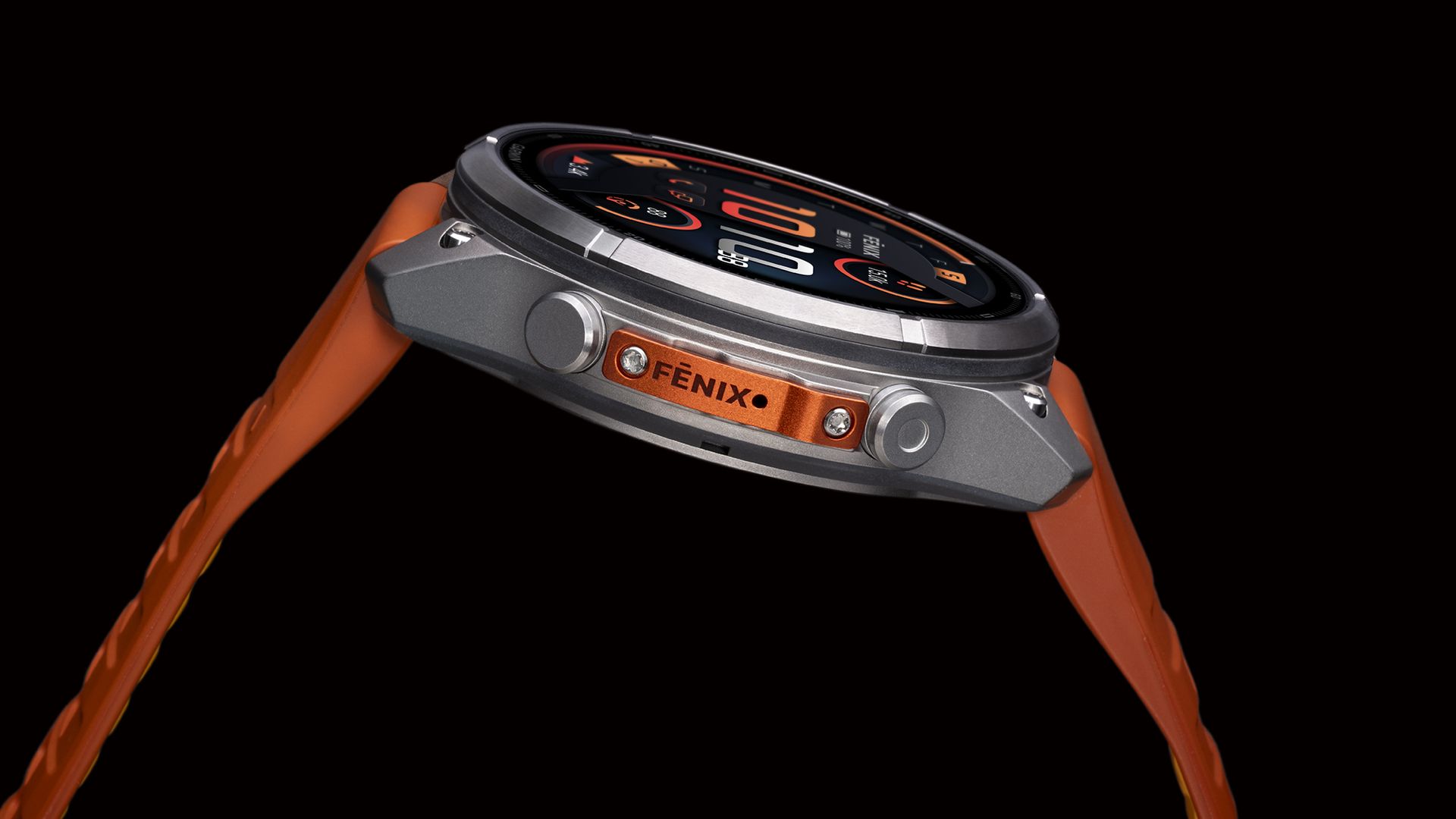
One part you might find a bit of a head-scratcher, though, is why even titanium watches like the Garmin Fenix 9 base model still have part-plastic bodies, despite costing $999 and up. Its entire sidewall is polymer, a super-tough reinforced plastic formulation, with the bezel and backplate as titanium elements. You need to upgrade to the Fenix 9 Pro — or even further to the Marq Generation 3 — to get a full metal jacket.
Garmin COO Brad Trenkle explained to me the difficulties in making this happen, which also helps to explain why these watches cost quite so much money.
“There are incredible benefits you can get from having a titanium case, but the all-metal case means radio signals can't get out,” says Trenkle.
In a Garmin watch this means anything that needs to transmit out of the casing, like Bluetooth, LTE, Satellite, ANT+, NFC, Wi-Fi. No signals out or in makes a connected smartwatch pretty useless.
The solution? You don’t use an all-metal case, but make the plastic parts that let the signal through as subtle, as minimal, as possible. But this in itself required some special processes.
“To get radio signals out, you have got to have a polymer in there. You add the polymer, you have to add multiple gaskets,” says Trenkle. “You add multiple gaskets you get thickness, and then suddenly you're wearing a tuna can on your wrist. And nobody wants to wear a tuna can on their wrist. We had that with Forerunner 201 years ago. We don't need to go back there.”
The Forerunner 201 was released in 2003, and is widely considered the first GPS-enabled runners’ watch. Yes, even though it does look a bit like a pager stuck to a watch strap.
Rubbery gaskets are required in a Garmin watch because, of course, water resistance is fundamental to series like the Garmin Fenix 9. You can’t just have relatively hard plastic sandwiched between two case elements of much harder titanium alloy: the gaskets act as seals.
Nano scale molding
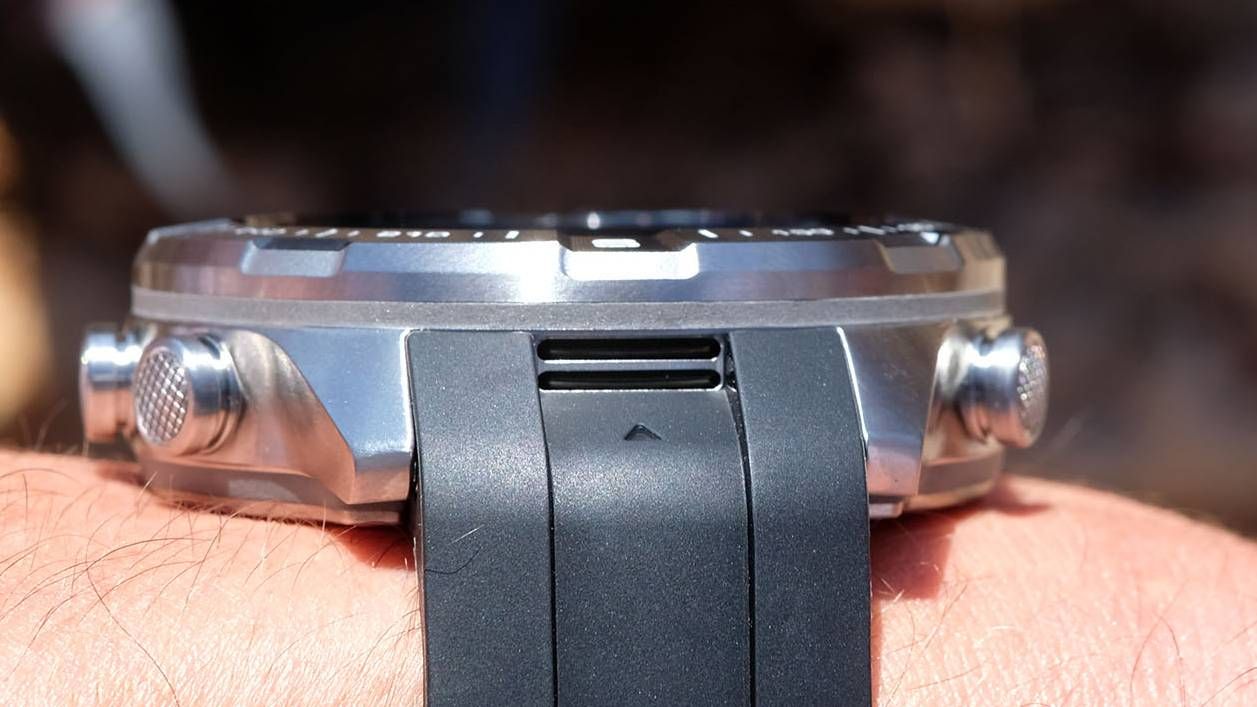
The solution for the Fenix 9 and Marq Generation 3 is a process Trenkle calls ‘nano molding’, or NMT.
“The basic idea here is that you are bonding a polymer and a metal together at the nano scale,” says Todd Register, Garmin Creative lead for its Outdoor segment. It sounds like Iron Man-grade stuff, but the concept isn’t a million miles from the light, fine grain sanding you might give a surface before attempting to paint it or glue it. Nano molding involves very finely etching, or texturing, the titanium so it can much more perfectly fit the polymer parts without a gasket.
At the launch of the Marq Generation 3 watch, Garmin used a picture of a piece of titanium magnified by 100,000 times to show the NMT process.
“If you look at the surface of the case, it's almost completely smooth. So there's no way to bond to the metal before it's been etched, but if we look at after the etching, you can see immediately the different type of texture that you get, and as you zoom in, you can see the type of interlocking at that nano scale that's happening between the polymer and the metal case,” says Register.
“You're going to get a super tight, rigid bond that is great to be able to get all of our antennas in there where needed and execute that in a really thin design compared to what we had previously.”
This isn’t a process that involves conventional adhesive. The polymer itself ends up bonded directly to the titanium — it’s elegant engineering.
NMT history
This concept is not new, even in mainstream consumer technology. Back in 2011 PhoneArena reported on how HTC — amid its fun years of peak mobile phone tech experimentation — was testing NMT to streamline the construction of its high-end HTC Sensation 4G Android phone.
That it’s still a relatively novel idea is likely, unfortunately, bad news for the idea NMT processes might soon trickle down the Garmin range.
One sub-range that would suit an all-titanium casing is Garmin Venu. The current Venu 4 has a polymer rear, and it’s one of the few series to still use a stainless steel bezel. An all-titanium casing would work great for a Venu 5 but, then again, the last thing this series needs is another major price jump.
The Garmin Venu 4 already jumped to $549.99/£469.99/AU949 from $450/£450/AU749 in the Venu 3 generation, and we’re not sure how much more we can stomach, let alone the watch-buying public. However, having had a chance to test drive the Garmin Marq, it’s clearly an important part of making a dive-ready watch that doesn’t pull too much focus on your wrist, in terms of weight and girth if not provocative style.
Are you looking for a Garmin watch, but not sure what to get? Take our quiz below to find your perfect smartwatch.