
 2 months ago
31
2 months ago
31
What we're really looking for when we try to unmask artificial intelligence
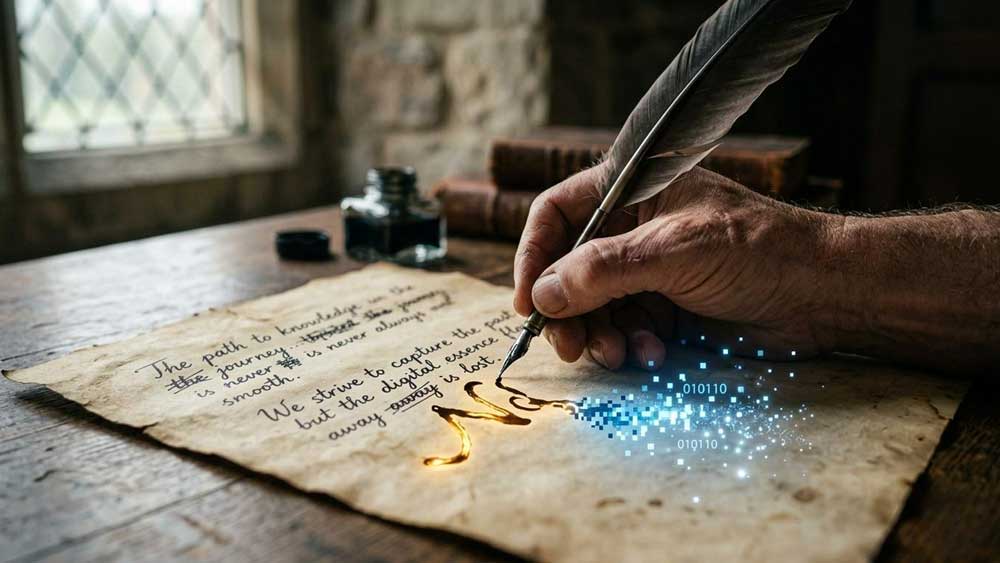
There's a moment, before we start reading an article, when we do something strange: we negotiate with ourselves for our attention. We scan the headline, the subheading, the first line. We look for a sign, an imperfection, a fingerprint that tells us: a person was here.
For some time now, this negotiation has grown harder. We've become detectives of doubt. We wonder whether the piece we're about to read was written by a hand or by a model. And if we discover — or suspect — that the author used artificial intelligence, something closes. The reading is no longer the same. But why?
I believe the problem isn't the AI itself. The problem is the feeling of being taken for a fool.
The real enemy isn't the prompt
Think about it: before ChatGPT and Claude existed, we already avoided certain texts. SEO pieces built on keyword stuffing, viral posts that repeat the same opinion three hundred times, sponsored content disguised as personal experience. They were one hundred percent human, yet they stirred the same revulsion we now feel for a generated text.
The difference doesn't lie in how the content was produced. It lies in why.
When we read, we look for an implicit pact: the author put something of themselves into what they wrote. I'm not talking about blood and tears — I'm talking about time. The time to think, to fail, to go back and delete a sentence that rang false. The time to live something and then find the right words to tell it.
AI, as we use it today, is a zero-time accelerator. And we, as readers, perceive this instinctively. It's not a matter of style. It's a matter of intention.
The mirage of detection
So why not use a tool that tells us, in percentage terms, whether a text is human or not?
Because it would be like relying on a horoscope to decide whether to trust someone.
Detectors exist, and they're terrible. Not because the engineers are incompetent, but because they're chasing a target that shifts every day. Language models improve, and detectors lag a few steps behind. But there's a deeper problem: even if they were perfect, they'd answer the wrong question.
A text can be written entirely by an AI and still be worth reading. It can have been curated, revised, enriched by an author who used the model as a tool, not a shortcut. And it can be handwritten by someone who has nothing to say, who repeats clichés without ever putting their face behind them.
A percentage doesn't tell us whether the text is honest. It doesn't tell us whether it will change us. It doesn't tell us whether the writer respects us.
Care as the only criterion
There's a word I often use when I talk about writing: care.
Care is when an author chooses not to publish a piece because it isn't ready yet. Care is when they read and reread to find the exact word, not the one that sounds most professional. Care is when they reply to comments, admit they don't know everything, tell a story that doesn't have a neat happy ending.
Care can't be detected by an algorithm. It's perceived.
And yet, on the internet, care has become a luxury. We're flooded with mass-produced content, optimized for clicks, for search engines, for feeds. We write for machines, hoping that machines will make us read by humans. It's a vicious circle that makes everything a little grayer, a little more identical, a little emptier.
AI didn't invent this problem. It amplified it.
A different proposal: transparency as an act of courage
What would happen if we stopped chasing the impossible dream of perfect detection and started asking for something simpler?
Transparency.
I'm not saying every writer should publish the history of their prompts. I'm saying we could build spaces — platforms, communities, publications — where care is the criterion for entry, not the technological origin of the text.
Think of a literary magazine. The editor doesn't ask whether the story was written with a pen or a computer. They read, judge, decide whether that story has a soul. They do it with their taste, their experience, their courage. And the reader, by choosing that magazine, is delegating their trust to a person, not an algorithm.
This is the real power of human curation. It's not infallible, but it's accountable. There's someone putting their face behind it. And when there's a face, there's also the possibility of trust.
Writing for the reader, not for the judge
I believe the future of online writing doesn't lie in witch-hunts for AI. It lies in rediscovering an ancient idea: writing for a specific reader, not for a metric.
If you write to pass a detector, you're writing for a machine. If you write to rank on Google, you're writing for an index. If you write to go viral, you're writing for an engagement algorithm.
But if you write to tell someone: this is what I learned, and I hope it's useful to you, then you're writing for a human being. And that human being, sooner or later, will know it. Not because they scanned your text, but because they felt something.
Trust cannot be measured in percentages. It's built, word by word, care after care.